
Educational and Health Promotion Posters
These posters have been developed by the Ora‘anga Tūmanava team with the aim of raising awareness and contributing to education around the importance of lifelong health. A range of options suitable for display in classrooms, staff rooms and/or community health clinics are available for printing either commercially or on a standard A3 colour printer.
Available Posters
Using posters to support community health
Ora‘anga Tūmanava health promotion posters aim to support healthy lifestyles by raising awareness and educating the public about the importance of lifelong health.
Lifelong Health – Our Tamariki Series
This poster series has been created to raise awareness of the importance of a healthy start to life and how this contributes to lifelong wellbeing.
The posters complement the Lifelong Health – Our Tamariki booklet, developed as a health resource for new and prospective parents. They are designed to promote the booklet, which is also available in printed or digital format.

Downloads
Posters 1 and 2 are suitable for display in health staff common areas such as break rooms and clinic office spaces. Posters 3, 4 and 5 are for public use in areas such as waiting rooms or community venues. Poster 5 contains a blank space to be filled in to let the viewer know where to access a printed copy of the booklet.
For printing at A2 or A1 please download the ‘FULL SIZE’ version which has print marks for commercial printing. The ‘SMALL’ version does not have print marks and is suitable for A3 colour printing.
Our Tamariki #1:
Lifelong Health (for health staff)


Our Tamariki #2:
Big Journeys (for health staff)

Our Tamariki #3:
Healthy Habits (for public)

Our Tamariki #4:
Nutrients for Mums (for public)
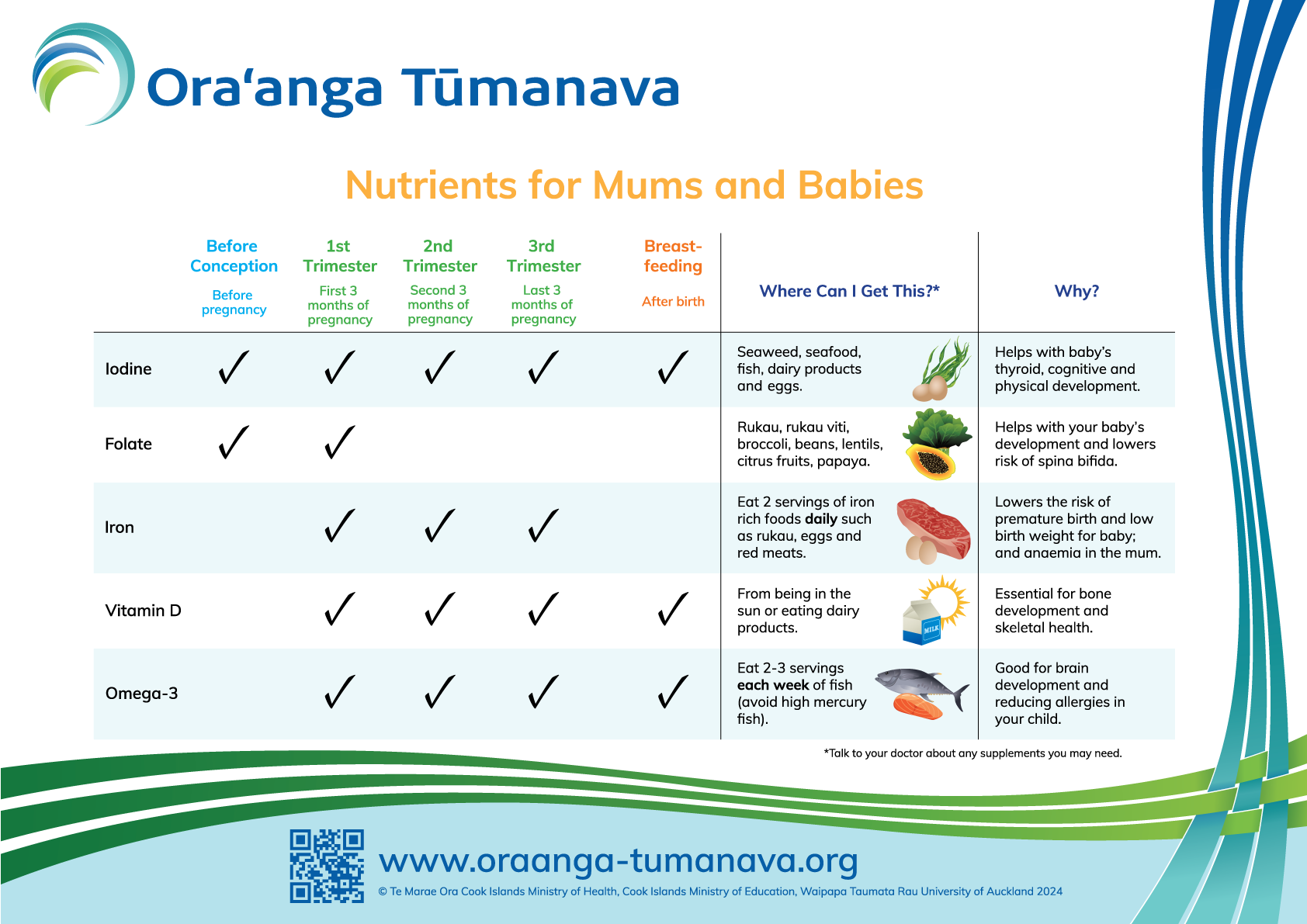
Our Tamariki #5:
Healthy Start (for public)

Build Your Future on Solid Foundations
Health interventions in early life play a crucial role in reducing the risk of developing chronic diseases later on. By addressing risk factors and promoting healthy behaviors from a young age, these interventions can significantly influence long-term health outcomes.
Early life interventions can modify developmental trajectories and enhance protective factors, leading to improved cognitive abilities, emotional regulation, and physical health. Actions taken during critical periods of development, such as preconception, childhood, and adolescence can mitigate the impact of adverse experiences and environmental factors that contribute to chronic disease risk. This life course approach ensures that health promotion and disease prevention efforts are sustained and effective, ultimately reducing the burden of chronic diseases and improving overall population health.

Downloads
This poster is available in English with a Cook Islands Maori subtitle, and is suitable for display in health staff common areas such as break rooms and clinic office spaces.
For printing at A2, A1 or A0 please download the ‘FULL SIZE’ version which has print marks for commercial printing. The ‘SMALL’ version does not have print marks and is suitable for A3 colour printing.
Let’s Talk About It – Teens
This poster is intended for education professionals to promote awareness of the range of cross-curricular education resources currently available from Ora’anga Tūmanava.
Links to learning resources
- Kai no te Oraanga Meitaki: Me, Myself, My Environment
- Te Maki Toto Vene (T2): Exploring Type 2 Diabetes
- Past, Present and Future Lifestyles in the Cook Islands
- Tōku Oraanga Kōpapa: Metabolic Health Record
Downloads
This poster is available in English and is suitable for display in education staff common areas such as school staffrooms.
For printing at A2, A1 or A0 please download the ‘FULL SIZE’ version which has print marks for commercial printing. The ‘SMALL’ version does not have print marks and is suitable for A3 colour printing.

Using classroom wall space to support learning
The use of posters in the classroom environment can support visual learners. Visual learners associate information with images or graphics. This means that they process information more effectively when they can see it.
The Pacific Science for Health Literacy Project (PSHLP) developed a series of classroom posters to support the overall learning goals associated with the project, and stimulate learning for visual learners.
- These posters are available to download and print from this page. The files are available in a range of sizes to suit varying printing needs.
- Links to associated learning resources are found with each poster.
- The PSHLP project team acknowledge the support of the Secretariat of the Pacific Community in sharing some of their posters for use in classrooms.
Wellbeing | Pito‘Enua
The Pacific Science for Health Literacy Project promotes a holistic model of wellbeing that encompasses complete physical, mental, spiritual and cultural wellbeing. This links to the World Health Organization’s definition of health as ‘a state of complete physical, mental and social health and not merely the absence of disease or infirmity’ (WHO, 2003). Learning programmes explore these concepts, including looking at values that are essential to supporting optimal health and wellbeing in a community.
Links to learning resources
Students in the middle school (Years 7 – 10) explore perceptions of different groups within the community regarding what it means to be healthy and well. This encourages learners to identify their own thinking, as well as allowing them to explore the thinking of others regarding this concept. Learning resources support students to undertake research in their family, school, or community to explore these concepts.
Students in the senior secondary school (Year 11) add further depth by engaging in learning that examines concepts of socio-ecological determinants of health and wellbeing, and explore concepts of social inequity associated with health and wellbeing.

Downloads
Downloads are available in Cook Islands Māori, Tongan and English.
For printing at A2, A1 or A0 please download the ‘FULL SIZE’ version which has print marks for commercial printing. The ‘SMALL’ version does not have print marks and is suitable for A3 colour printing.
Pito‘Enua:
Cook Islands Māori
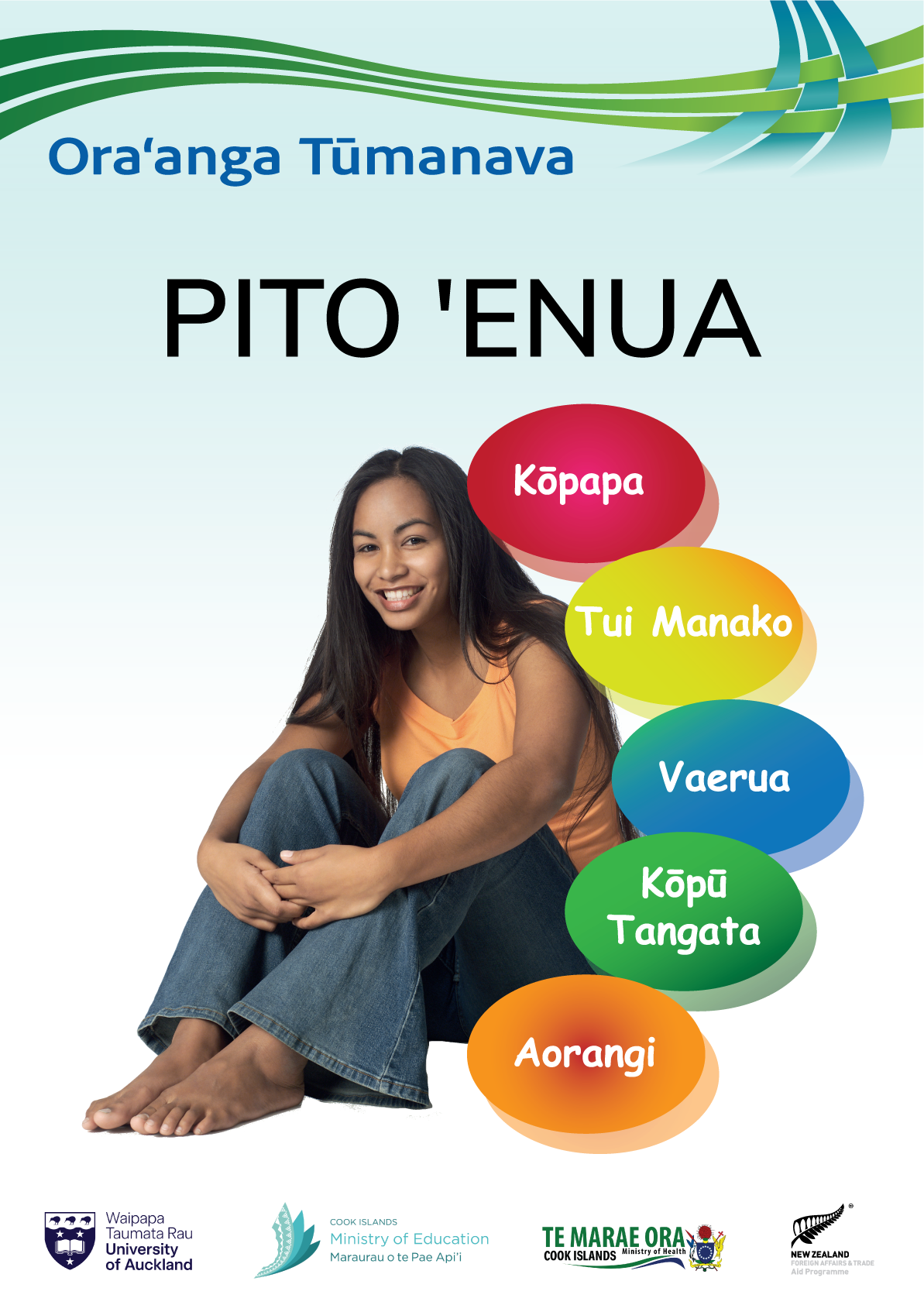
Pito‘Enua:
English
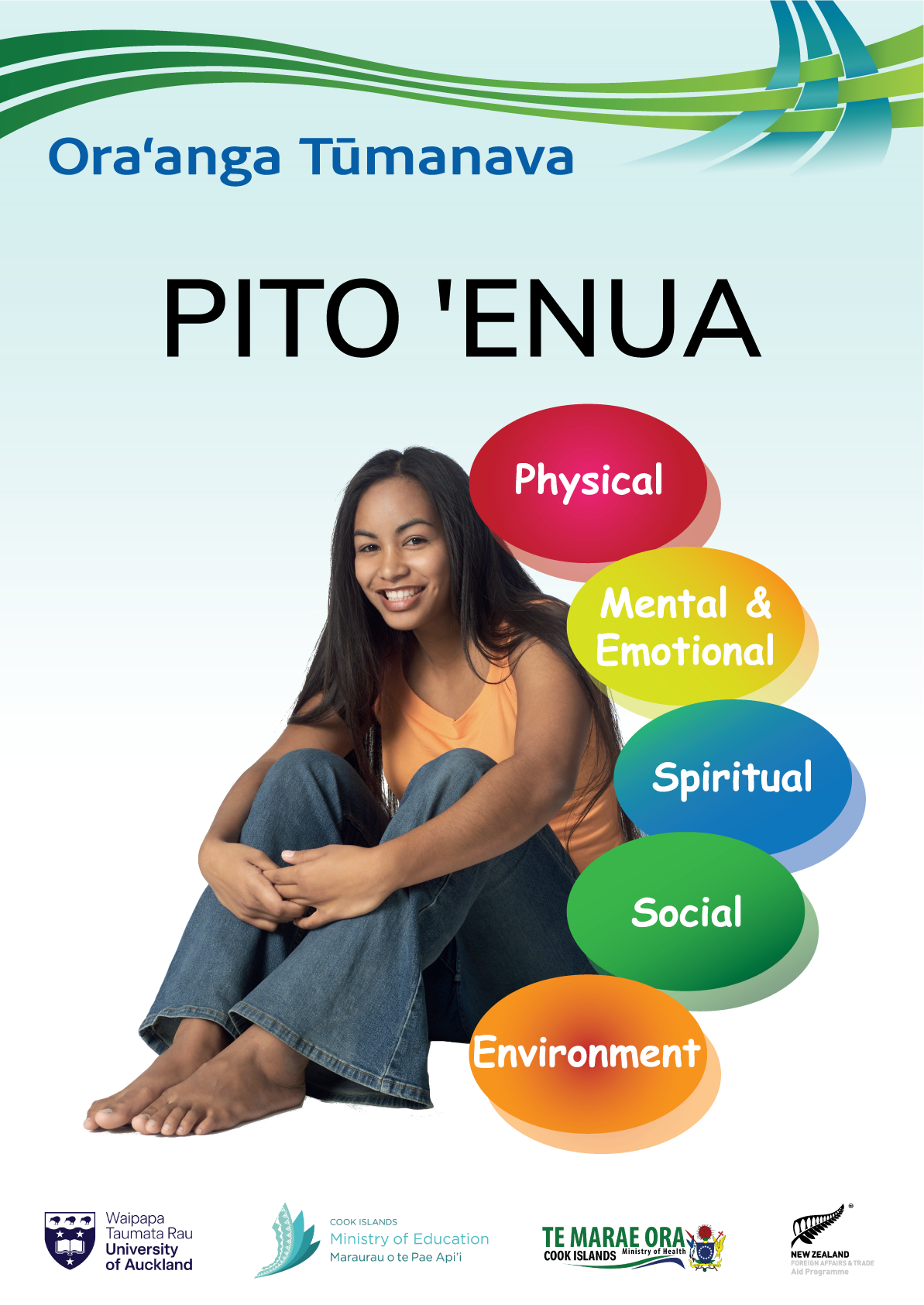
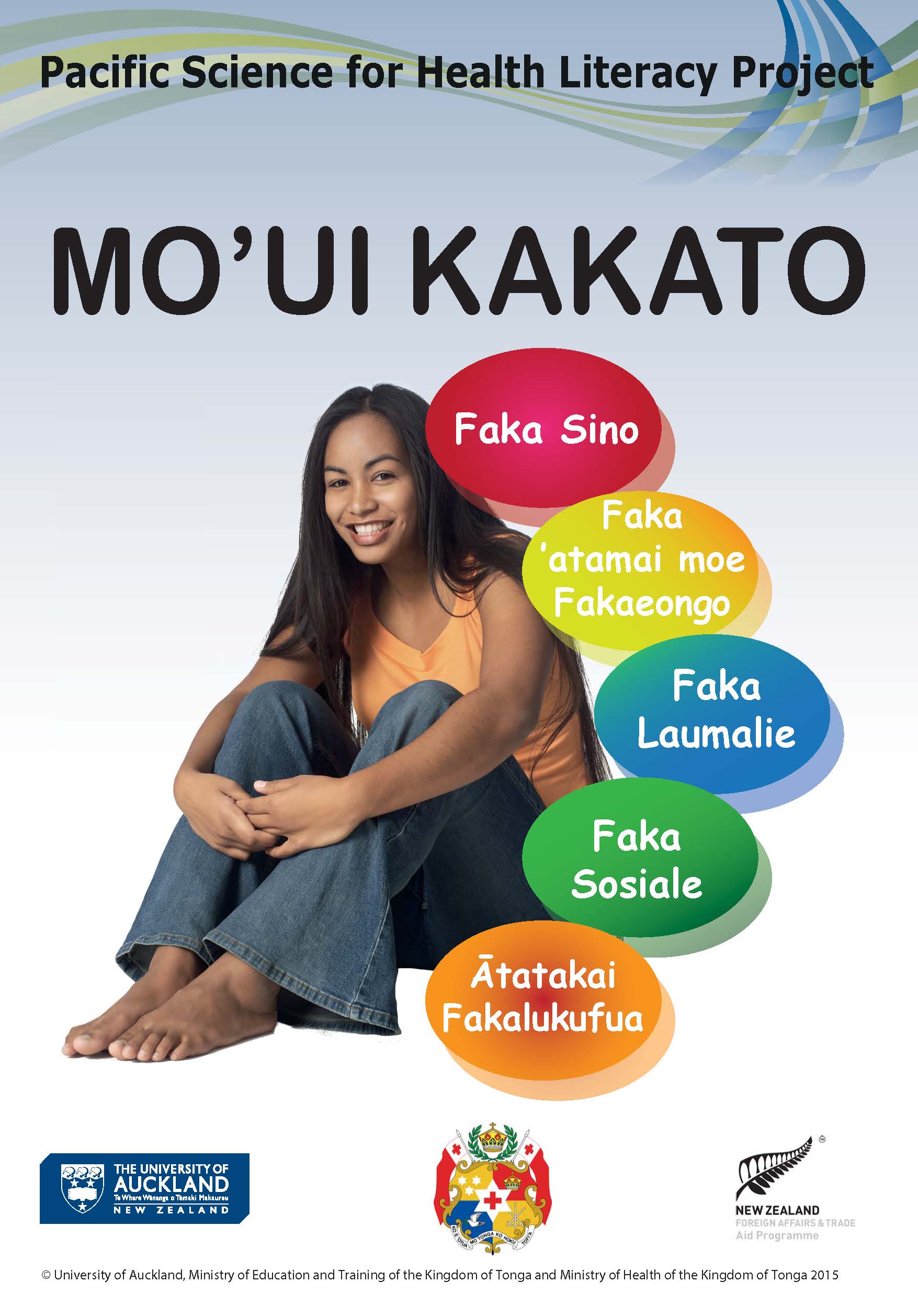
Mo’ui Kakato:
English

Health and Wellbeing Throughout the Life Course
LENScience programmes explore a life course approach to health and wellbeing, identifying that factors throughout the life course influence health and wellbeing in an ongoing manner. In particular, our programmes facilitate exploration of evidence that environmental factors experienced in early life impact health and wellbeing throughout life.
Links to learning resources
- Children Programmed for Obesity
- My First 1000 Days
- Me, Myself, My Environment: Nutrition
- Me, Myself, My Environment: Growing Up
- Feast or Famine: Understanding gene expression
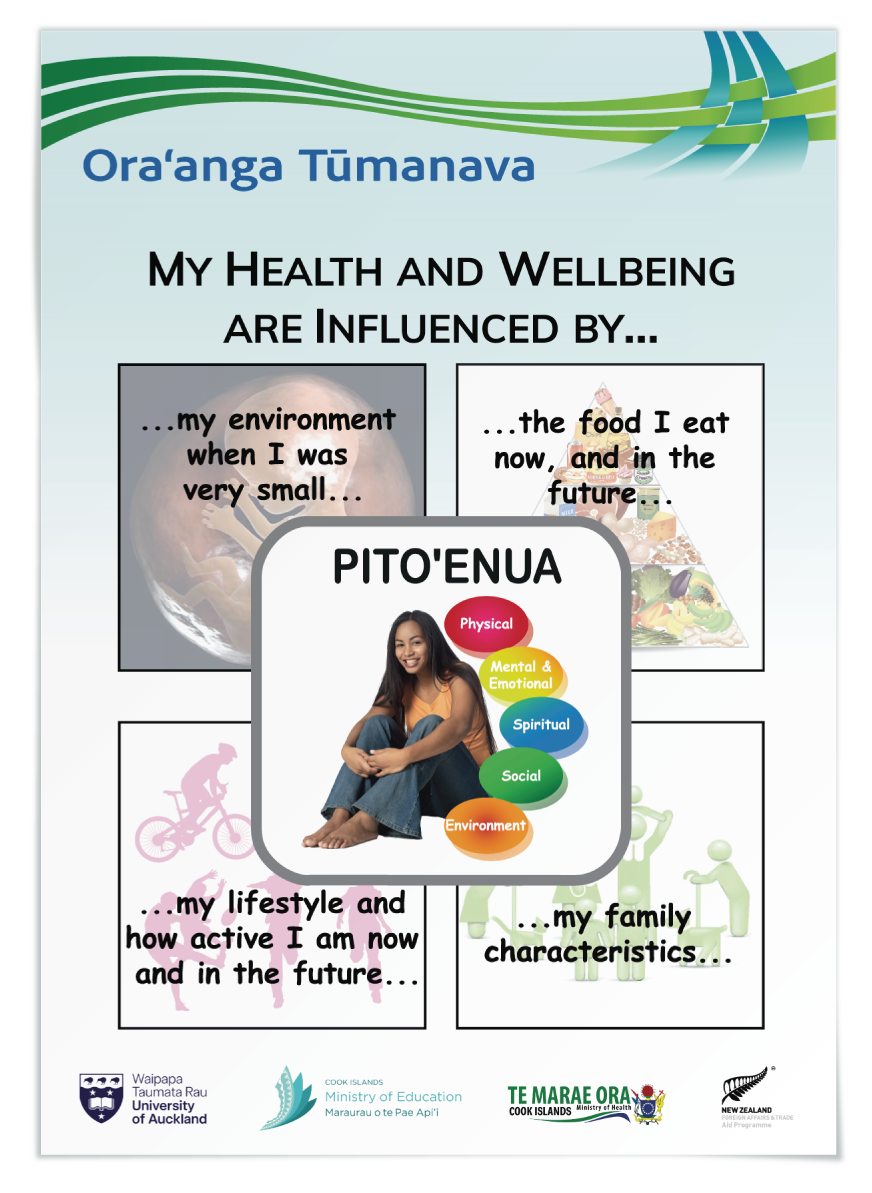
Downloads
Downloads are available in Cook Islands Māori, Tongan and English.
For printing at A2, A1 or A0 please download the ‘FULL SIZE’ version which has print marks for commercial printing. The ‘SMALL’ version does not have print marks and is suitable for A3 colour printing.
My Health and Wellbeing
Cook Islands Māori

My Health and Wellbeing
Cook Islands English

My Health and Wellbeing
Tongan

My Health and Wellbeing
Tonga English

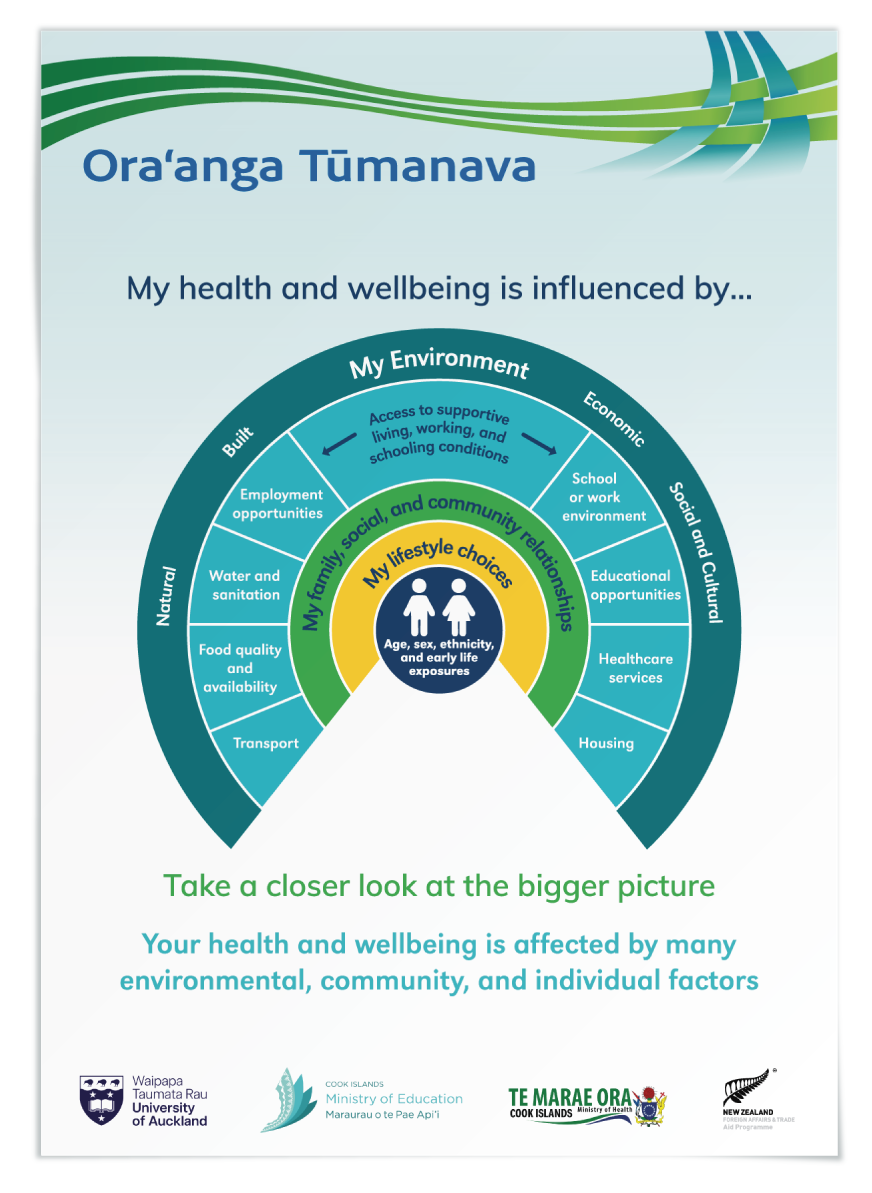
The Socio-Ecological Determinants of Health and Wellbeing
The Healthy Start to Life learning programmes (including those within PSHLP) promote opportunities for young people to explore evidence about the non-communicable disease crisis from a range of perspectives. In the general media, an incorrect message about the NCD crisis that is often portrayed is that of individual blame.
The Healthy Start to Life programmes work to engage students in learning that challenges this frame of reference and promotes the concept of socio-ecological determinants of health and wellbeing. In particular, the Year 11 programmes exploring type 2 diabetes as an issue affecting communities see 15-year old students examining this concept.
Research evidence from evaluation of these programmes shows that the learning experiences promote the development of awareness of socio-ecological determinants of health and wellbeing in young people.
Links to learning resources
My Health Profile | Kai no te Oraanga Meitaki | Te Maki Toto Vene (T2) E Manamanata no Toku Iti Tangata
Links to professional learning and development resources
Te Maki Toto Vene (T2) E Manamanata no Toku Iti Tangata: Teacher Resource | Essentials of Type 2 Diabetes: An issue for my community: Teacher Resource
Downloads
Downloads are available in English.
For printing at A2, A1 or A0 please download the ‘FULL SIZE’ version which has print marks for commercial printing. The ‘SMALL’ version does not have print marks and is suitable for A3 colour printing.
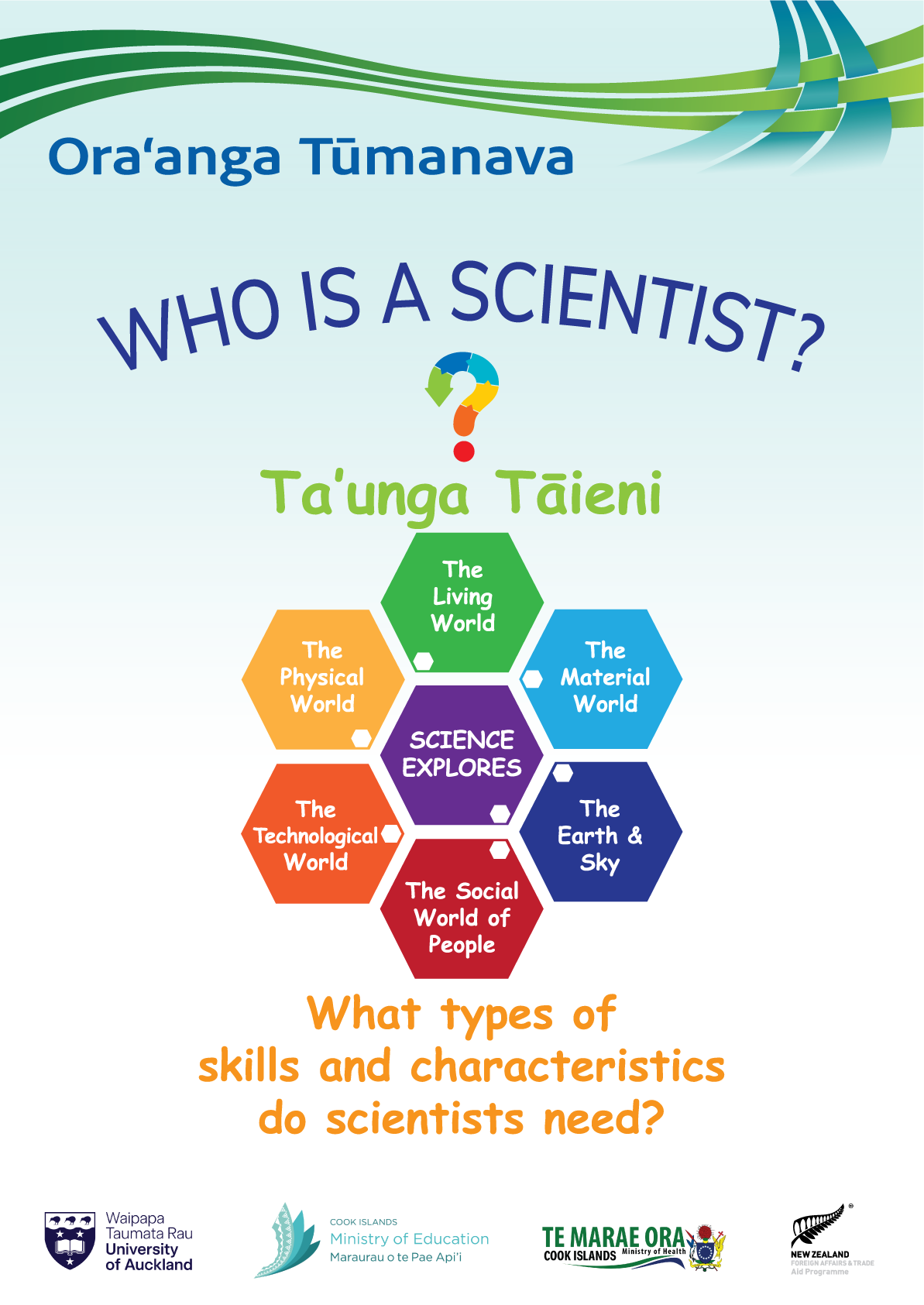
Who is a Scientist?
Science, like any human activity, has a culture of its own. This culture is influenced by the people and organisations that are engaging in science, and will differ from place to place.
Opportunities to examine who scientists are, what they do, and the culture of science are embedded throughout the LENScience programmes. These include narratives about scientists and their work, as well as narratives that the students create from experiences of engaging with scientists in their local setting.
Links to Learning Resources
Who is a Scientist | Meet a Scientist

Downloads
Downloads are available in Cook Islands Māori, Tongan and English.
For printing at A2, A1 or A0 please download the ‘FULL SIZE’ version which has print marks for commercial printing. The ‘SMALL’ version does not have print marks and is suitable for A3 colour printing.
Ta‘unga Tāieni
Cook Islands Māori

Ta‘unga Tāieni
Cook Islands English
Ko hai e Tokotaha
Saienisi? Tongan
Ko hai e Tokotaha
Saienisi? Tonga English

Think Like a Scientist
LENScience programmes support capability development that allows adolescents to grow into adults who seek out and use scientific and health evidence in every day decision making. Central to these capabilities is understanding of the Nature of Science (NOS) as well as science as a process and science as a knowledge system.
Many of the LENScience learning resources are based around narratives that explore the work of scientists involved in research associated with life course approaches to the reduction of noncommunicable disease risk in communities. Developing understanding of the nature and process of science is enhanced by exploring actual research, as well of course as allowing young people hands on experiences of undertaking scientific research. These posters support this ongoing theme throughout all LENScience programmes.

Links to learning resources
Think Like a Scientist | Who is a Scientist? | Stories of Scientists | My First 1000 Days | Children Programmed for Obesity
Downloads
Downloads are available in Cook Islands Māori, Tongan and English.
For printing at A2, A1 or A0 please download the ‘FULL SIZE’ version which has print marks for commercial printing. The ‘SMALL’ version does not have print marks and is suitable for A3 colour printing.
Think Like
a Ta‘unga Tāieni
Cook Islands Māori
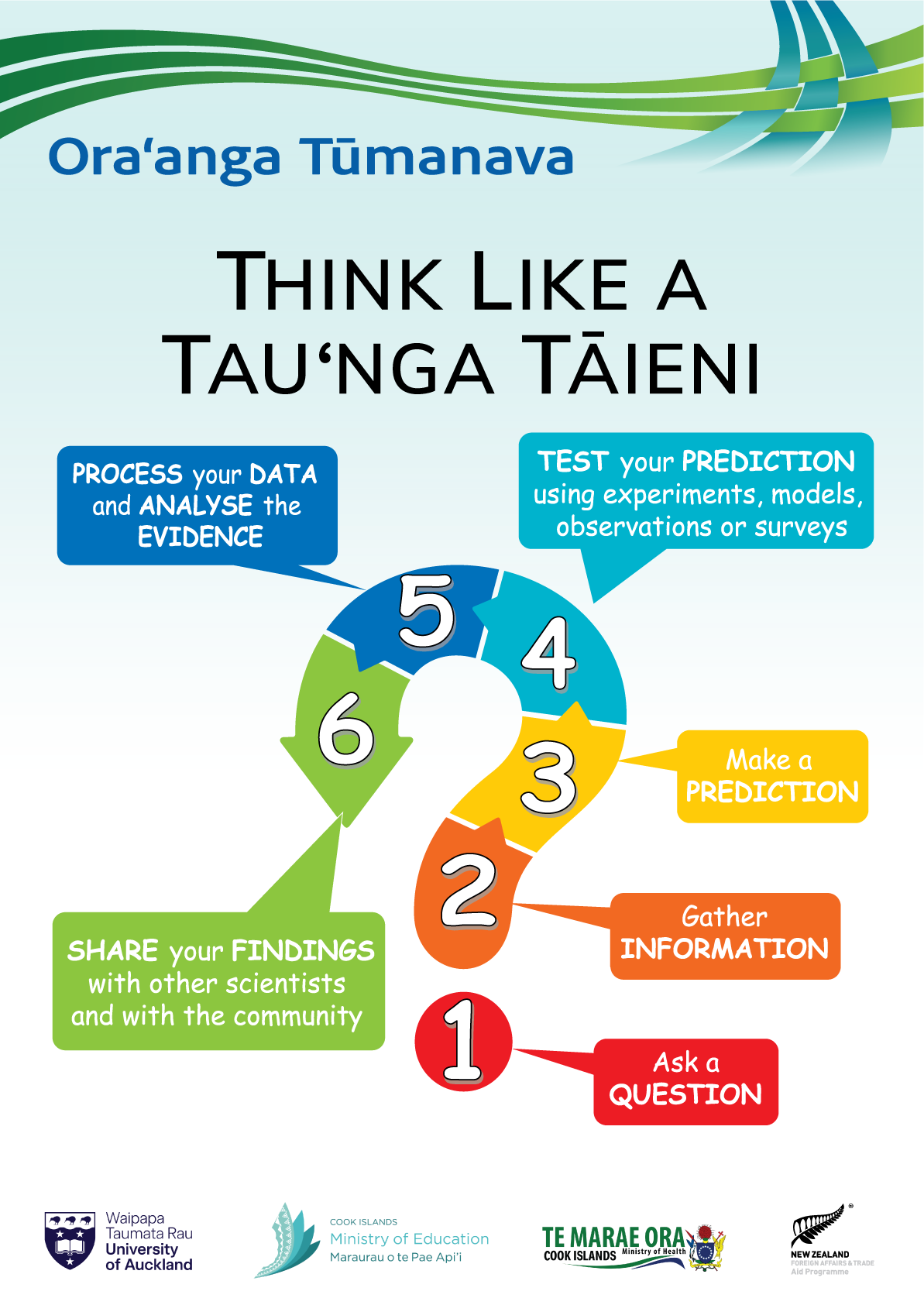
Think Like a Scientist
English

Fakakaukau
Faka e Saienisi
Tongan

Fakakaukau
Faka e Saienisi
English

Healthy Lifestyles Series
The healthy lifestyle posters and postcards have been developed from a combination of the LENScience Healthy Start to Life learning resources and resources from partners, particularly the Cook Islands Ministries of Health and Education. Through our partnership with the Cook Islands Ministry of Health, LENScience is very grateful to the Secretariat of the Pacific Community who have supplied posters for the project from their resources.
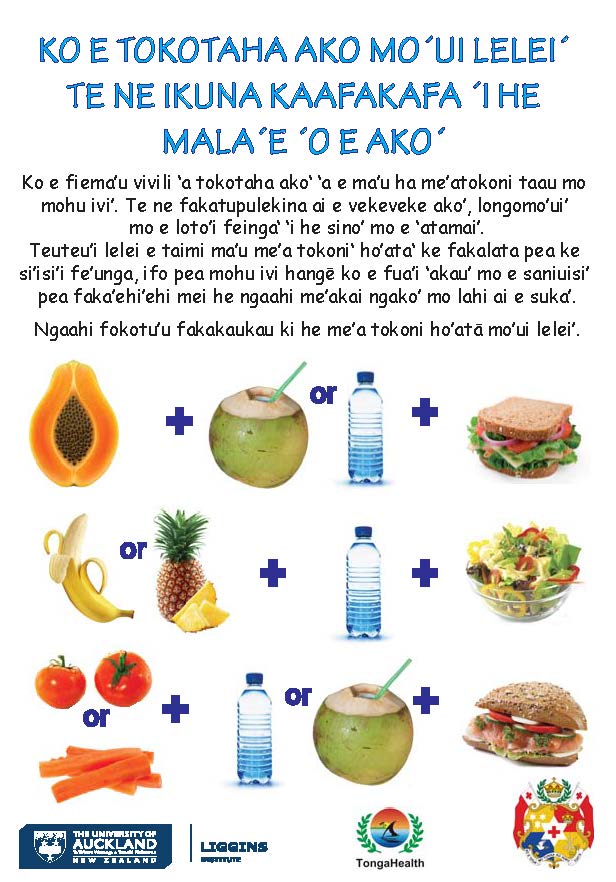
The postcard series are of particular note, and were initially developed by the Cook Islands Ministry of Education in response to the growing need to include an all of community response to supporting improved health and wellbeing throughout life for children and adolescents. These resources have since been adapted by the Pacific Science for Health Literacy project team in Tonga and are available to download in English and or Tongan. They are designed to be postcard size, ideal for a reminder on the fridge door or family noticeboard!

Links to learning resources
- Me, Myself, My Environment: Nutrition
- Ko Au, Ko Au Anō, Ko Tōku Taiao: Te Kai
- Me, Myself, My Environment: Kai no te Oraanga Meitaki
- Me, Myself, My Environment: Me’akai
- Te Maki Toto Vene (T2) E Manamanata no Toku Iti Tangata
- Essentials of Type 2 Diabetes: An issue for my community
Downloads
For printing at A2, A1 or A0 please download the ‘FULL SIZE’ version which has print marks for commercial printing. The ‘SMALL’ version does not have print marks and is suitable for A3 sized colour printing.
The ‘POSTCARD’ version is provided where this is the intention of the resource.
What is
a Healthy Diet?
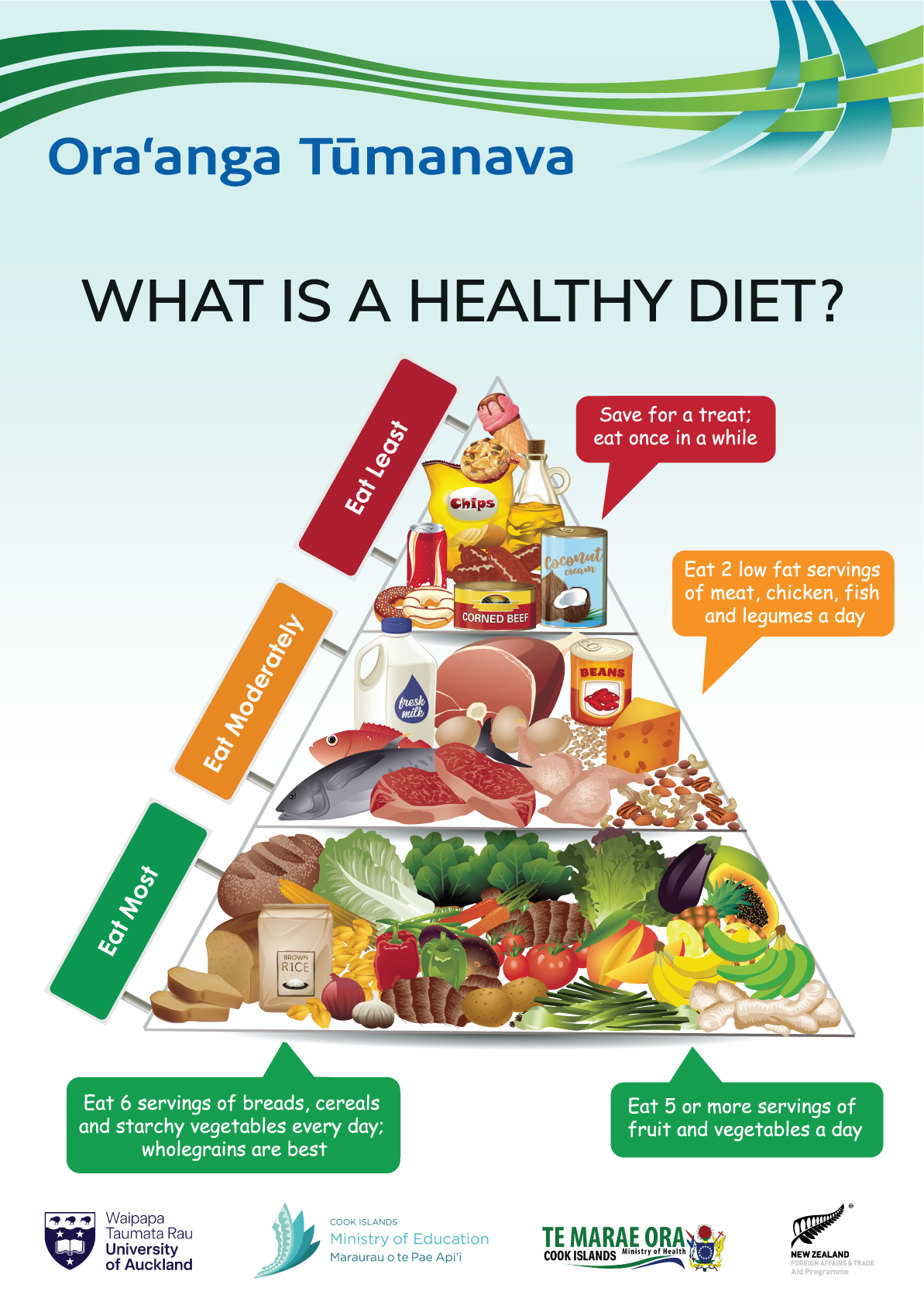
The Path to
a Healthier Pacific

Healthy Eating
in the Pacific

For Good Health,
Eat Less of these Foods

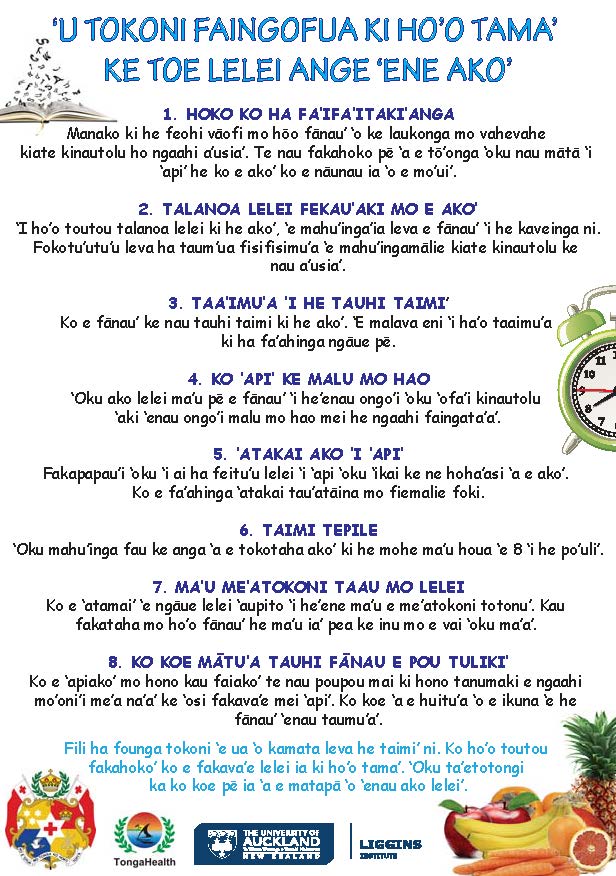
A Healthy Child is a
Successful Learner –
English


A Healthy Child is a
Successful Learner – Tongan
Ko‘ai Mātou | About Us
Learn more about our work, partnerships and engagement
Tua Tāpapa | Our History
Discover the milestones and story behind our journey
Te Aronga ‘Anga‘anga | Our People
Meet our team